Clarence Thomas Civil Rights Statute Reexamination: Biography, Landmark Cases, and Judicial Legacy
Are you looking for a subtitle recommendation for the Clarence Thomas article we were just working on, or did you need help with something else

Contents
- 1 Legal Profile Table
- 2 Introduction
- 3 Early Life and Academic Excellence
- 4 Notable Judicial Career & Landmark Cases
- 5 The Financial Side: Net Worth & Settlements
- 6 Controversy & Public Opinion
- 7 Legal Analysis
- 8 Where Are They Now?
- 9 Frequently Asked Questions (FAQs)
- 10 Conclusion: The Legal Legacy of Clarence Thomas
Legal Profile Table
| Field | Details |
|---|---|
| Name | Clarence Thomas |
| Current Position | Associate Justice of the Supreme Court of the United States; President George H. W. Bush nominated him in 1991, the Senate confirmed him on October 15, 1991, and the Court’s members list says he took his seat on October 23, 1991. |
| Education | College of the Holy Cross, A.B., cum laude, 1971; Yale Law School, J.D., 1974. |
| Years in Practice | More than 51 years in law and judicial service, beginning in 1974 and continuing through 2026. |
| Key Specialization | Constitutional interpretation, originalism, civil rights statutes, federalism, statutory interpretation, and appellate review. (Encyclopedia Britannica) |
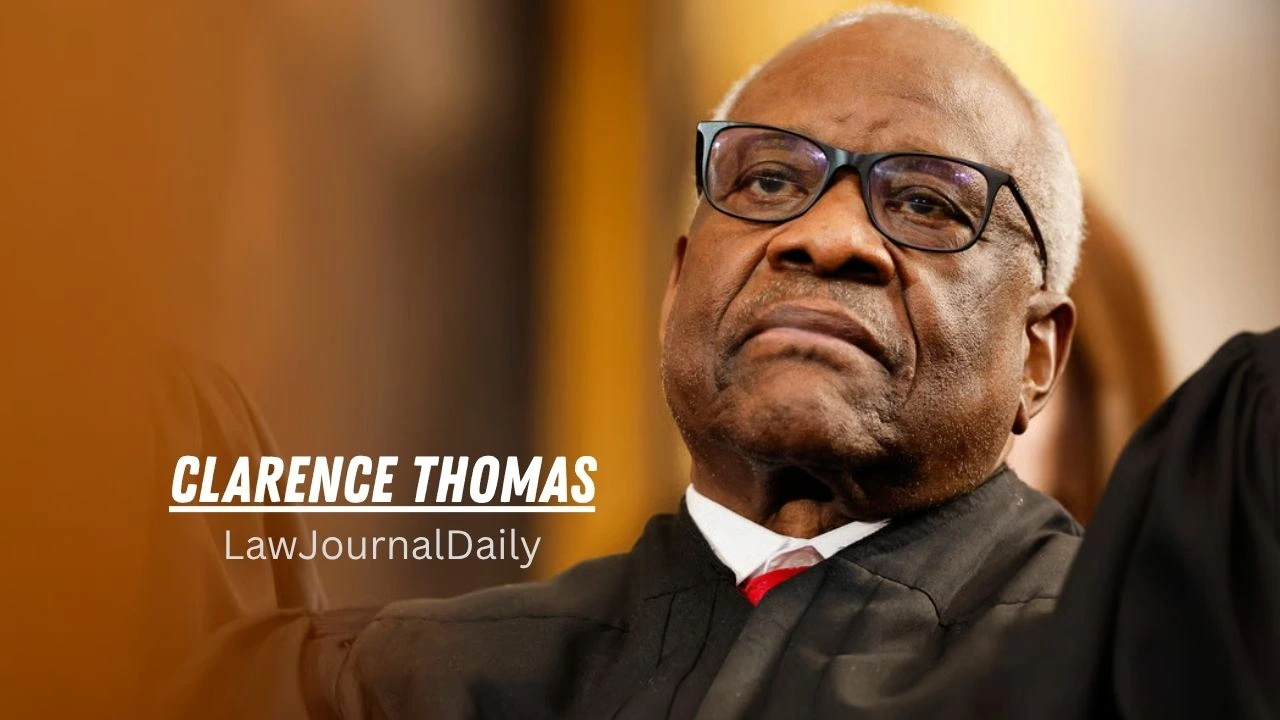
Clarence Thomas civil rights statute reexamination matters because his career sits at the center of modern arguments over originalism, the reach of the Voting Rights Act, affirmative action, equal protection, and how far courts should go when interpreting federal civil rights laws. He has served on the Supreme Court since 1991, and his opinions continue to shape the way lawyers, judges, and lawmakers debate race-conscious remedies, districting, and constitutional text. (Supreme Court of the United States)
He is not merely a long-serving justice; he is one of the most influential voices in the Court’s modern originalist movement. That matters today because the current Court’s civil-rights docket increasingly turns on the meaning of old statutes such as Section 2 of the Voting Rights Act, Title VI, Title VII, and 42 U.S.C. §1981.
Internal link opportunity: place a natural link to LawJournalDaily.com’s Supreme Court and appellate coverage here, right after the opening context paragraph.
Internal link opportunity: place a second link inside the legal analysis section to LawJournalDaily.com’s civil rights litigation and judicial updates coverage.
Introduction
Thomas’s public record begins far from the marble halls of the Supreme Court. He was born in the Pinpoint community near Savannah, Georgia, in 1948, studied first for the priesthood, then earned degrees from Holy Cross and Yale, and entered public life through state and federal civil-rights posts before joining the federal judiciary. The Supreme Court biography lists service in Missouri, Monsanto, Senator John Danforth’s office, the Education Department’s civil-rights office, the Equal Employment Opportunity Commission, and the D.C. Circuit before his elevation to the Supreme Court.
That background is essential to understanding his later legal philosophy. Thomas’s judicial career is often described as originalist, and his opinions repeatedly insist that statutory and constitutional meaning should be anchored in text, history, and the limits the law actually sets. In civil-rights cases, that approach frequently leads him to reject broad judicial doctrines that he believes go beyond the enacted language.
Early Life and Academic Excellence
Thomas attended Conception Seminary in Missouri from 1967 to 1968 and then transferred to the College of the Holy Cross, where he graduated cum laude in 1971 with an A.B. in English literature. He next earned a J.D. from Yale Law School in 1974. The Supreme Court biography says he was admitted to law practice in Missouri in 1974, and it lists no judicial clerkship before his early government work began.
His early career was rooted in public service rather than private-firm prestige. After law school, he worked as an assistant attorney general of Missouri from 1974 to 1977, then as an attorney with Monsanto from 1977 to 1979, and then as a legislative assistant to Senator John Danforth from 1979 to 1981. He later served as Assistant Secretary for Civil Rights at the U.S. Department of Education from 1981 to 1982 and as chairman of the EEOC from 1982 to 1990.
Those roles matter because they gave Thomas first-hand exposure to the machinery of civil-rights enforcement. Before he became a judge, he was already working inside the agencies that investigate discrimination, regulate employment practices, and shape the federal government’s civil-rights agenda. That experience helps explain why later disputes over voting rights, equal protection, and employment discrimination became some of the most closely watched parts of his jurisprudence.
Notable Judicial Career & Landmark Cases
Thomas entered the federal judiciary in 1990 when President George H. W. Bush nominated him to the U.S. Court of Appeals for the D.C. Circuit. In 1991, Bush nominated him to the Supreme Court, the Senate confirmed him on October 15, 1991, and the Court’s members list says he took his seat on October 23, 1991. That sequence places him among the longest-serving justices in modern history.
One of the clearest examples of his civil-rights impact is Students for Fair Admissions, Inc. v. President and Fellows of Harvard College, No. 20-1199 (2023). The Court held that race-conscious admissions practices at Harvard and the University of North Carolina violated the Equal Protection Clause and Title VI; Thomas wrote separately to emphasize his view that the Fourteenth Amendment should be read as a rule of colorblind constitutionalism. The majority opinion and Thomas’s separate writing became a central reference point for affirmative-action litigation nationwide.
Thomas’s voting-rights record is equally consequential. In Allen v. Milligan, No. 21-1086 (2023), the Court rejected Alabama’s challenge and kept the Section 2 vote-dilution framework in place. Thomas dissented, arguing that Section 2 should not be read to regulate districting plans at all and that the statutory text is focused on ballot access and vote counting. His dissent is especially important for lawyers tracking the future of the Voting Rights Act because it lays out a far narrower reading of Section 2 than the Court’s controlling doctrine.
That argument did not disappear after Allen. In Louisiana v. Callais, No. 24-109 (decided April 29, 2026), Thomas joined Justice Gorsuch in a concurrence stating that the Court should never have read Section 2 as creating an entitlement to roughly proportional representation and that, in his view, Section 2 does not regulate districting at all. The concurrence said that district lines do not fall within the statutory terms “voting qualification,” “prerequisite to voting,” or “standard, practice, or procedure,” and concluded that no Section 2 challenge to districting should ever succeed.
Thomas also authored New York State Rifle & Pistol Association, Inc. v. Bruen, No. 20-843 (2022), which is not a civil-rights statute case but is one of the clearest examples of his method in action. The opinion held that the Second and Fourteenth Amendments protect a right to carry a handgun for self-defense outside the home, and it did so through a historical approach that has become central to modern constitutional litigation. For lawyers, Bruen is a template for how Thomas links constitutional meaning to historical practice rather than modern balancing tests.
Another landmark is Dobbs v. Jackson Women’s Health Organization, No. 19-1392 (2022). Thomas joined the majority and wrote separately to say that substantive due process has no basis in the Constitution’s text and should be reconsidered. Britannica summarizes his view as a call to revisit precedents such as Griswold, Lawrence, and Obergefell, and the Dobbs concurrence itself reflects that logic. Whether one agrees or not, this opinion shows the same pattern visible in his civil-rights writings: narrow textual reading, skepticism of judge-made doctrine, and willingness to challenge settled precedent.
Judicial Philosophy & Influence
Thomas is widely identified as an originalist. Britannica describes him as a practitioner and advocate of originalism, meaning he reads constitutional text according to the public meaning it had at the time of adoption. His opinions repeatedly reinforce that philosophy by emphasizing history, text, and the limited role of judicially created doctrines.
That approach gives his civil-rights opinions a distinctive edge. In Students for Fair Admissions, he treated race-conscious admissions as incompatible with the Constitution’s equal-protection principle. In Allen and Callais, he treated Section 2 of the Voting Rights Act as a statute about access to the ballot, not a license for courts to re-engineer district maps in pursuit of proportional representation. In Dobbs, he challenged a doctrine that many justices had treated as settled. The common thread is not simply conservatism; it is a strong preference for textual limits over evolving judicial policy.
He is also notable for how often he writes separately. Britannica notes that many of his most consequential contributions came through concurrences and dissents rather than majority opinions, and that those writings often marked a conservative extreme inside the Court. For legal analysts, that matters because Thomas’s separate writings frequently become the blueprint for later briefing, future dissents, and long-term doctrinal change.
The Financial Side: Net Worth & Settlements
For public-facing legal reporting, Thomas’s finances are best discussed as estimates and disclosures, not hard facts. Forbes estimated his net worth at roughly $4 million in January 2024, while the Federal Judicial Center lists the salary of an associate justice at $306,600 as of January 1, 2026. That salary is public and fixed by the federal judiciary; the net-worth figure is an estimate based on publicly available information. (Forbes)
His finances also became part of a broader ethics debate because of repeated reporting about gifts, travel, and disclosure issues. Reuters reported that Thomas amended his financial disclosures in 2024 and that the federal judiciary’s policymaking body later declined to refer him to the Justice Department over ethics allegations in January 2025. (Reuters)
There are no public civil-litigation settlements that define his career in the way a celebrity lawsuit or corporate dispute might define another public figure. The financial story around Thomas is instead the interaction between public salary, financial disclosure forms, gifts, and the ethics rules that govern federal judges. (Federal Judicial Center)
Controversy & Public Opinion
Thomas has been one of the most polarizing figures on the Supreme Court for decades. Britannica notes that his rulings made him a politically controversial justice, praised by conservatives and criticized by liberals, and the modern controversy has been intensified by reports about undisclosed luxury trips and gifts from wealthy benefactors.
Reuters reported in 2023 and 2024 that Thomas disclosed some travel and hospitality items after earlier reporting raised questions, and in 2025 the Judicial Conference declined to send the matter to the Justice Department. Thomas has said he believed certain personal hospitality from close friends did not need to be reported, while critics have argued that the disclosures were incomplete and that the episode has damaged public confidence in the Court.
The controversy is significant for legal journalism because it is not just about one justice’s conduct; it is about institutional legitimacy. When a Supreme Court justice becomes the subject of ethics scrutiny, the public debate expands from biography into judicial administration, recusal norms, disclosure rules, and whether the Court should have enforceable ethics standards like other branches of government.
Legal Analysis
Thomas’s influence on U.S. legal policy is strongest where constitutional interpretation and civil-rights statutes meet. His writings suggest that courts should not expand the meaning of statutes beyond the text Congress actually adopted, even if the older doctrine has become familiar or politically important. That idea appears most clearly in his Section 2 opinions, where he treats voting-rights law as a narrow protection against ballot denial and vote-counting barriers, not a broad license for race-conscious district design.
That same method also shapes his view of race-conscious remedies more broadly. In Students for Fair Admissions, Thomas framed affirmative action as incompatible with the Equal Protection Clause’s promise, and in Callais he reiterated that Section 2 should not be transformed into a command for proportional representation. For civil-rights lawyers, the practical effect is profound: plaintiffs, defendants, and appellate courts must now brief these cases with an eye toward text, history, and the possibility that long-standing remedial doctrines may be narrowed or overturned.
Thomas’s jurisprudence also matters because it influences the language of future amicus curiae briefs and appellate court strategy. Advocates who want to preserve race-conscious remedies must now answer his most important challenge: whether the statute they rely on really authorizes the remedy they seek, or whether they are asking judges to build policy beyond the enacted words. In that sense, Thomas has become one of the Court’s most important drivers of statutory reexamination in civil-rights law.
Where Are They Now?
As of May 2026, Clarence Thomas remains an Associate Justice of the U.S. Supreme Court. The Court’s current members page still lists him as serving on the bench, and his most recent separate writing in the sources reviewed here is his concurrence in Louisiana v. Callais on April 29, 2026, joined by Justice Gorsuch.
His current role is especially relevant because he is still shaping the Court’s approach to the very issues that define modern legal debate: race, voting, statutory interpretation, and the reach of precedent. For publishers covering the Supreme Court, he remains a headline justice whose opinions can move litigation strategy, public policy, and constitutional doctrine at the same time.
Frequently Asked Questions (FAQs)
Who nominated Clarence Thomas to the Supreme Court?
President George H. W. Bush nominated Clarence Thomas to the Supreme Court in 1991. The Senate confirmed him on October 15, 1991, and the Court’s members list says he took his seat on October 23, 1991.
What is Clarence Thomas’s judicial philosophy?
Clarence Thomas is best known as an originalist. Britannica describes him as a practitioner and advocate of originalism, and his opinions repeatedly rely on text, history, and the original meaning of the Constitution or statute at issue.
Why is Clarence Thomas important to civil-rights statute debates?
He is important because he has repeatedly pressed for narrower readings of civil-rights laws, especially the Voting Rights Act. His dissent in Allen v. Milligan and concurrence in Louisiana v. Callais argue that Section 2 should not be used to police districting in the way modern doctrine has done.
What are Clarence Thomas’s most important recent cases?
His most important recent cases include Students for Fair Admissions in 2023, Allen v. Milligan in 2023, Bruen in 2022, Dobbs in 2022, and Louisiana v. Callais in 2026. Together, they show his influence on affirmative action, voting rights, gun rights, and substantive due process.
Is Clarence Thomas still serving on the Supreme Court?
Yes. As of May 2026, he remains an Associate Justice, and the Court’s current member list still includes him. His April 29, 2026 concurrence in Callais confirms that he is actively participating in current Supreme Court decisions.
Conclusion: The Legal Legacy of Clarence Thomas
Clarence Thomas’s legacy is not limited to longevity. He has become a defining voice for originalism, a persistent critic of race-conscious policy, and one of the most influential justices in the modern reexamination of civil-rights statutes. His career began in civil-rights agencies and matured into a judicial philosophy that often narrows those same laws through strict textual reading.
For legal readers, that makes Thomas indispensable. Whether the issue is the Voting Rights Act, affirmative action, equal protection, due process, or the meaning of precedent, his opinions force courts and litigants to answer the hardest question in American law: what does the law actually say, and how far can judges go beyond it?