Gambling Addiction Class Action Lawsuits Consumer Protection Deceptive Marketing: Legal Risks & Consumer Rights in the U.S.

Legal Disclaimer: This article is for informational purposes only and does not constitute legal advice. Laws vary by state and facts matter. If you believe you have been harmed by deceptive gambling practices, consult a licensed U.S. attorney.
Contents
- 1 Introduction: The Rise of Gambling Addiction Class Action Lawsuits Consumer Protection Deceptive Marketing Claims
- 2 Understanding Gambling Addiction Class Action Lawsuits Consumer Protection Deceptive Marketing Trends
- 3 Eligibility for Gambling Addiction Class Action Lawsuits Consumer Protection Deceptive Marketing Claims
- 4 Legal Comparison Table: Gambling Addiction Class Action Lawsuits Consumer Protection Deceptive Marketing Framework
- 5 Common Questions About Gambling Addiction Class Action Lawsuits Consumer Protection Deceptive Marketing
- 6 Conclusion: Why Gambling Addiction Class Action Lawsuits Consumer Protection Deceptive Marketing Claims Matter (H2)
Introduction: The Rise of Gambling Addiction Class Action Lawsuits Consumer Protection Deceptive Marketing Claims
The rapid expansion of the online gambling industry across the United States has created both economic opportunity and serious consumer risk. Since the legalization wave following Murphy v. NCAA (2018), online betting platforms have used aggressive digital marketing strategies to attract millions of users.
However, a troubling pattern has emerged.
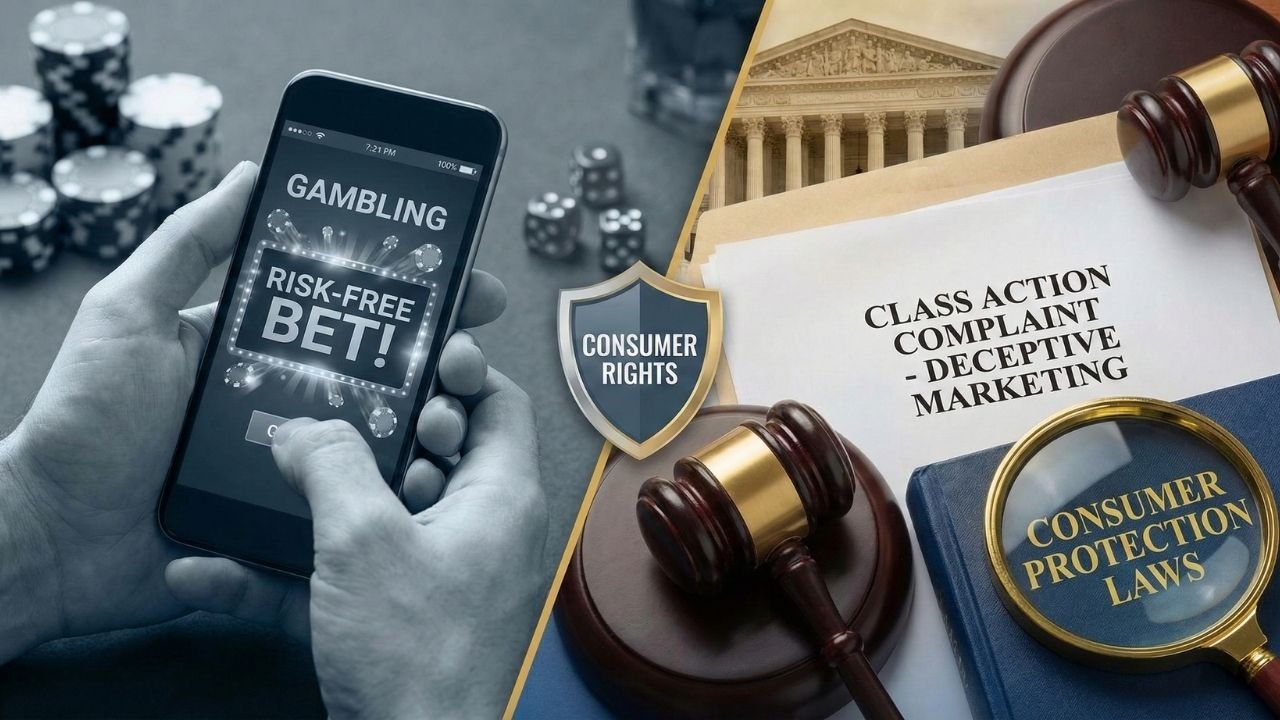
Many of these platforms promote so-called “risk-free bets,” “bonus bets,” and “guaranteed wins” that may not be as safe or transparent as they appear. For vulnerable individuals, these marketing tactics can trigger compulsive behavior and lead to severe financial and emotional harm.
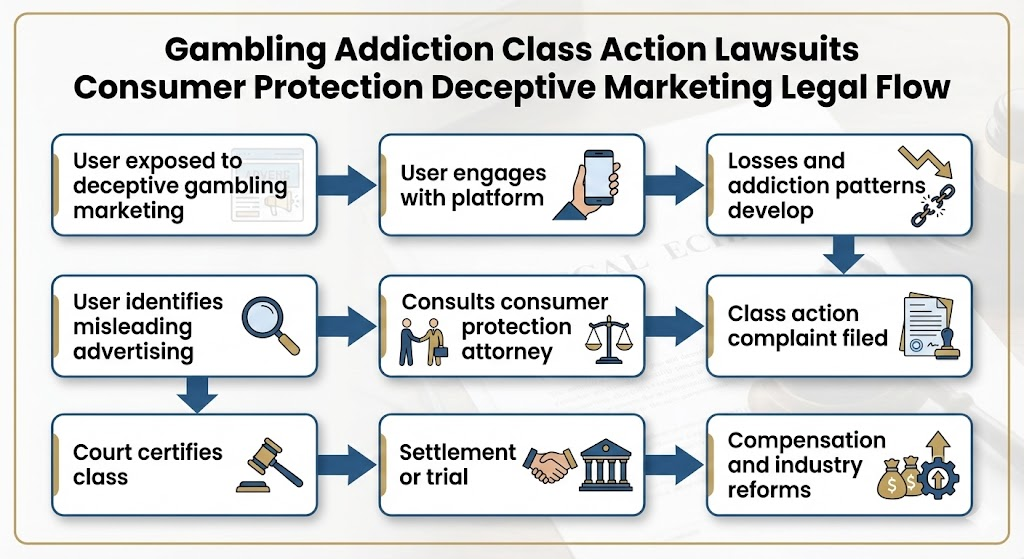
As a result, gambling addiction class action lawsuits consumer protection deceptive marketing claims are rising across multiple U.S. jurisdictions. These lawsuits allege that online gambling companies engaged in deceptive advertising, targeted vulnerable users, and failed to implement meaningful consumer safeguards.
From a legal perspective, this trend represents a major shift: courts and regulators are increasingly evaluating whether online gambling platforms are violating consumer protection laws designed to prevent deceptive and unfair business practices
Understanding Gambling Addiction Class Action Lawsuits Consumer Protection Deceptive Marketing Trends
Over the past few years, gambling addiction class action lawsuits consumer protection deceptive marketing claims have been filed against major online sportsbooks and gaming platforms, including DraftKings, FanDuel, BetMGM, and others.
These lawsuits typically allege that companies used misleading promotions and behavioral targeting tools to:
- Encourage repeated betting after losses
- Minimize disclosure of real financial risks
- Incentivize continued deposits through bonus credits
According to publicly reported filings discussed in legal industry sources like Bloomberg Law and Law360, plaintiffs argue that these platforms rely on data analytics and behavioral tracking to identify high-value or high-risk users and continue marketing to them—even when there are signs of addiction.
Behavioral Design and Addiction Mechanics
At the center of gambling addiction class action lawsuits consumer protection deceptive marketing litigation is the argument that gambling apps use psychological reinforcement patterns, including:
- Variable reward cycles
- Near-miss experiences
- Time-sensitive promotional pressure
- Loss-recovery incentives
When these tactics are combined with misleading advertising, plaintiffs claim the conduct becomes not just unethical—but unlawful under consumer protection statutes.
Key Allegations in Gambling Addiction Class Action Lawsuits Consumer Protection Deceptive Marketing
Legal complaints filed in gambling addiction class action lawsuits consumer protection deceptive marketing cases often revolve around three major allegations.
1. Predatory Algorithms Targeting Vulnerable Users
Plaintiffs argue that gambling companies deploy AI-driven marketing systems that analyze player losses and trigger targeted promotions encouraging continued betting. These systems may:
- Offer cashback or bonus bets after losses
- Send push notifications to inactive users
- Provide VIP incentives to high-spending players
From a legal standpoint, such conduct may be framed as exploitative or unfair business practices under state consumer protection statutes.
2. False Advertising and Misleading “Risk-Free” Claims
A central issue in gambling addiction class action lawsuits consumer protection deceptive marketing litigation is whether advertising language like “risk-free bet” is deceptive.
In many cases, the so-called “risk-free” offer actually requires the consumer to:
- Wager their own money first
- Receive credits instead of cash refunds
- Meet rollover requirements before withdrawing
Under the Federal Trade Commission Act (15 U.S.C. § 45), marketing is unlawful if it is likely to mislead a reasonable consumer about a material fact.
3. Failure to Enforce Self-Exclusion Protections
Most regulated gambling states require operators to provide self-exclusion programs, allowing individuals to voluntarily ban themselves from betting platforms.
In multiple gambling addiction class action lawsuits consumer protection deceptive marketing complaints, plaintiffs allege that:
- Self-excluded users continued receiving marketing emails
- Accounts were not properly blocked
- VIP services continued outreach
Such failures may violate state gaming regulations and strengthen consumer protection claims.
The Role of Consumer Protection Laws in Gambling Addiction Class Action Lawsuits Consumer Protection Deceptive Marketing
The legal foundation of gambling addiction class action lawsuits consumer protection deceptive marketing claims is built on both federal and state consumer protection laws.
At the federal level, the FTC Act prohibits deceptive and unfair business practices. The Federal Trade Commission has authority to investigate misleading advertising and impose penalties or corrective actions.
At the state level, nearly all states have their own Unfair and Deceptive Acts and Practices (UDAP) statutes, such as:
- California Business & Professions Code § 17200
- New York General Business Law § 349
- Illinois Consumer Fraud Act
Under these laws, plaintiffs in gambling addiction class action lawsuits consumer protection deceptive marketing cases may seek damages for:
- Financial losses caused by misleading promotions
- Addiction-related treatment expenses
- Emotional distress
Courts generally evaluate whether the conduct would mislead a reasonable consumer and whether the harm was directly caused by the deceptive practice.
Eligibility for Gambling Addiction Class Action Lawsuits Consumer Protection Deceptive Marketing Claims
Not every gambling loss qualifies for legal action. However, individuals may be eligible to join gambling addiction class action lawsuits consumer protection deceptive marketing claims if certain legal criteria are met.
First, the individual must have engaged with a gambling platform operating in a jurisdiction where consumer protection laws apply to the alleged misconduct.
Second, the individual must have suffered measurable harm, which may include:
- Significant financial losses linked to misleading promotions
- Diagnosed gambling addiction or compulsive behavior
- Emotional or psychological damage
- Rehabilitation or counseling expenses
Third, there must be evidence of deceptive marketing practices by the operator.
Why Legal Consultation Is Critical
Anyone considering participation in gambling addiction class action lawsuits consumer protection deceptive marketing litigation should consult a licensed U.S. attorney experienced in consumer protection law.
An attorney can evaluate:
- Whether a class action already exists
- Whether you qualify as a class member
- The potential damages you may recover
Benefits of Gambling Addiction Class Action Lawsuits Consumer Protection Deceptive Marketing Claims
Filing or joining gambling addiction class action lawsuits consumer protection deceptive marketing claims can lead to several legal and financial outcomes.
Consumers may receive financial compensation for losses tied to deceptive promotions. Courts may also award reimbursement for treatment or rehabilitation costs related to gambling addiction.
Additionally, these lawsuits can drive industry-wide reforms, including:
- Clearer advertising disclosures
- Limits on targeted marketing
- Stronger self-exclusion enforcement
- Mandatory consumer warnings
Legal Comparison Table: Gambling Addiction Class Action Lawsuits Consumer Protection Deceptive Marketing Framework
| Legal Element | Federal Law | State Law | Role in Gambling Addiction Class Action Lawsuits Consumer Protection Deceptive Marketing |
|---|---|---|---|
| Advertising Regulation | FTC Act (15 U.S.C. §45) | UDAP statutes | Determines whether ads like “risk-free bets” are deceptive |
| Consumer Rights | FTC enforcement | State Attorney General actions | Allows claims for unfair and deceptive conduct |
| Self-Exclusion | Limited federal role | State gaming regulators | Failure to enforce strengthens liability |
| Damages | Civil penalties | Monetary recovery | Plaintiffs may recover losses and treatment costs |
| Class Action Procedure | FRCP Rule 23 | State procedural rules | Allows group litigation |
Common Questions About Gambling Addiction Class Action Lawsuits Consumer Protection Deceptive Marketing
Many consumers ask whether losing money alone is enough to file a claim. In most cases, it is not. The loss must be tied to deceptive marketing or unlawful practices.
Another common question is whether agreeing to terms and conditions prevents legal action. Courts have repeatedly held that deceptive advertising can still be unlawful even if users accepted general platform terms.
People also ask how long gambling addiction class action lawsuits consumer protection deceptive marketing cases take. These cases often take several years due to their complexity.
Finally, most class action attorneys handle these cases on a contingency fee basis, meaning clients typically do not pay upfront legal fees.
Conclusion: Why Gambling Addiction Class Action Lawsuits Consumer Protection Deceptive Marketing Claims Matter (H2)
The rise of gambling addiction class action lawsuits consumer protection deceptive marketing claims reflects a growing recognition that the online gambling industry must operate transparently and responsibly.
Consumer protection laws exist to ensure that individuals are not misled, exploited, or harmed by deceptive business practices. When gambling companies fail to meet these standards, legal accountability becomes necessary.
For affected individuals, understanding your rights is the first step toward recovery and justice. If you believe you have been impacted, consulting a licensed attorney can help you explore your legal options and potential remedies.
Final Legal Disclaimer:
This article is for informational purposes only and does not constitute legal advice. If you believe you have been harmed by deceptive gambling practices, consult a licensed attorney in your state.